


What if we could identify the early signs of an IBD flare before symptoms become more severe? At Ampersand Health, we’re exploring how patient-reported information and wearable technology could help make this possible. Our initial research has revealed promising patterns, alongside important insights into what it will take to turn flare prediction into meaningful support for patients and their clinical teams.
We previously shared our ambition to explore how machine learning could help predict flares in people living with inflammatory bowel disease (IBD), and why this could be an important step forward in IBD care. Since then, our data science team has been busy testing models to explore what might be possible.
People using our My IBD Care app can track how they feel day to day, helping to build a picture of their health over time. By combining this information with data from connected smartwatches and fitness trackers, we’ve been exploring whether it might be possible to predict IBD flares. In this article, we share what we’ve learned so far, the early findings that show promise, and what comes next.
Why flare prediction matters
IBD is characterised by unpredictable periods of flare and remission. An early warning of a potential flare, even a few weeks in advance, could provide valuable insight into what happens between clinic visits, blood tests and stool tests. For patients, it could mean greater confidence to recognise early signs and contact their IBD team sooner. For gastroenterology teams, it could create opportunities to intervene earlier, with timely action potentially helping to reduce symptoms or lessen the severity of a flare. For the NHS, this proactive approach could help reduce the need for emergency care and make better use of stretched IBD services.
At Ampersand Health, our mission is to support people in managing their chronic inflammatory conditions between appointments, with a focus on their health and wellbeing as a whole. Exploring flare prediction is a natural extension of this mission. Our My IBD Care app already helps people track symptoms, stool patterns and test results, alongside providing personalised insights into their health. Flare prediction could build on these capabilities, offering people a clearer picture of what might lie ahead and helping them recognise when earlier action may be needed.
Why wearables, and what we did
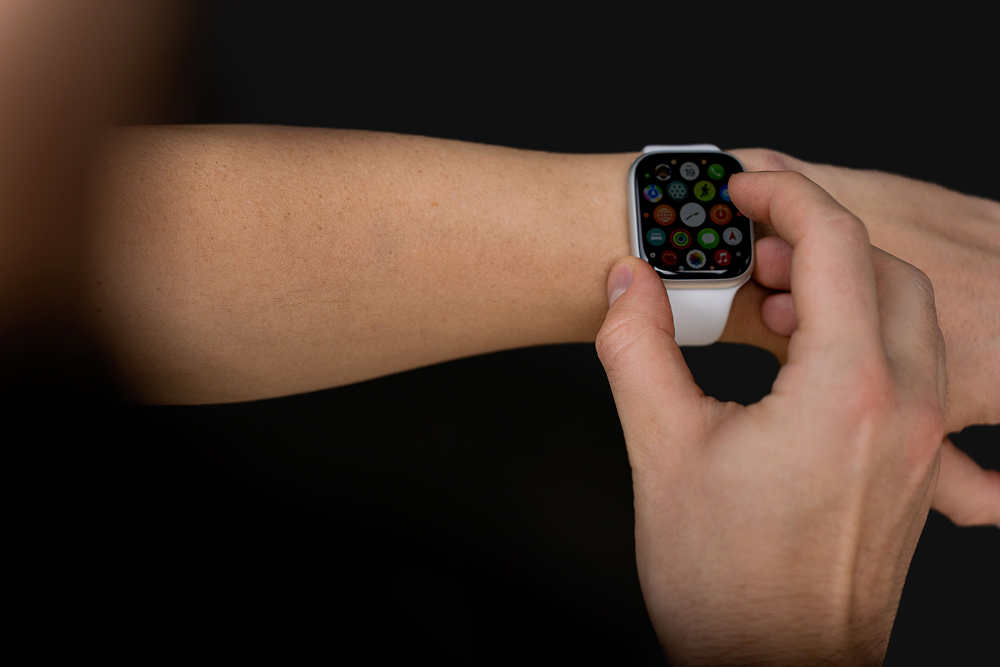
IBD affects more than the gut. Active inflammation can be associated with changes in the autonomic nervous system, which helps regulate functions such as heart rate and recovery. Consumer wearables, such as the Apple Watch, Fitbit and Oura Ring, are increasingly being explored for their potential to provide valuable health insights in digital healthcare. By tracking measures such as heart rate variability (HRV), resting heart rate, daily steps and sleep, these devices can offer a clearer picture of changes in the body over time.
We wanted to know whether the same early-warning signs could be found in real-world data from My IBD Care users. We analysed longitudinal patient data across a number of flare-associated data points. We then tested different modelling approaches and evaluated them on the question: is a flare likely one, two, three or four weeks from now?
What we found so far
The early findings are encouraging. Among users who recorded both stable periods and flares while wearing a connected device, we observed noticeable differences in the weeks leading up to a flare compared with their more stable periods. *Resting heart rate tended to increase, while heart rate variability decreased. Daily step counts also fell, potentially reflecting the wider impact of IBD on everyday life, from reduced social activity to difficulties managing work and daily routines.
These findings are consistent with recent published research, which highlights heart rate variability as a potentially important indicator of flare risk. Our analysis also revealed something further: meaningful differences in flare risk between individual patients. However this is only half the picture.
The next challenge is to predict when an individual might be approaching a flare. Our analysis highlighted an important opportunity to strengthen this approach: having a more balanced picture of people’s health during both stable periods and flares. People may be more likely to record their symptoms when they’re feeling unwell, meaning our dataset contained more information about flare periods. Building a richer picture of everyday health, including when symptoms are stable, will help us refine our models and explore how accurately we can identify early signs of a flare.
Where we are heading
This first stage has given us a strong foundation: a secure, reproducible research and data pipeline, clear definitions of what constitutes a flare, and a focused set of signals to investigate further. Just as importantly, it has helped us identify where to focus our efforts next.
At Ampersand Health, we’re well placed to build on these findings. Through My IBD Care, we bring together patient-reported outcomes, everyday health tracking and wearable data, creating opportunities to generate real-world evidence (RWE) that reflects people’s experiences beyond the clinic. This whole-person perspective is particularly valuable in IBD, where the impact of the condition extends far beyond clinical measures of inflammation to affect energy, sleep, activity and quality of life.
Our ambition is to translate these insights into meaningful improvements in care. By identifying patterns that may signal a flare before symptoms become more severe, we hope to support earlier, more personalised interventions and give gastroenterology teams greater visibility of patients’ health between appointments. Ultimately, this could help bridge the gap between everyday self-management and clinical decision-making, supporting better outcomes for people living with IBD.
Over the coming months, we’ll be working with clinical partners to design the next phase of our flare prediction research, building on what we’ve learned and exploring how these insights could be applied in clinical practice.
As always, patient privacy, data protection and clinical safety will remain central to this work.
Interested in learning more about our research and real-world evidence programmes? We’d love to hear from you. Get in touch at info@ampersandhealth.co.uk.
*These findings are preliminary and exploratory. They come from data that was not collected for this purpose, involve a modest number of people, and have not yet been validated. They are a foundation for the next stage of research, not evidence of clinical performance.

